Showing posts with label Private temple. Show all posts

Sunday, August 22, 2010

20 I recently came across (browsing the web) Angela Palmer’s exhibit of tree roots at Trafalgar Square, London. The exhibit was installed on November 2009.


I recommend for my readers to read Ms Palmer’s statement to learn of the artist’s activities. Currently the show is being exhibited on the lawn of Oxford University’s Museum of Natural History and the Pitt Rivers Museum in central Oxford and will be shown there until July 31, 2011.

While Angela Palmer calls her exhibit a “Ghost Tree Exhibition” and I dedicate my “Temple to Johns” to axed forests, I believe that our concerns are the same.

As irony would have it, even as I posted my two previous blogs, a small forest next to my property was torn down by the owner of the property abuts mine. I say “torn”, because modern technology can quite manage without the chain saw handled by human hands. While a saw cuts the stump, the operation actually resembles Jack the Ripper at his worst. Of course, I am speaking from the point of view of one who believes the forests to be holy places even from a quite practical point of view. Are the floods in Pakistan not the result of a lack of forests to absorb the rains?

Incidentally, I believe that Ms. Palmer’s exhibit is in its own fashion a temple. If you live in England, it might be worth visiting it and writing a letter to this blog about your impression.

Tuesday, August 17, 2010

19 As per a previous post, on August 13, the Temple to Melnays Jānis held a fundraising dance with the musical group "Kantoris 04" performing. The temple was visited by about one hundred people, seventy-eight of them paying guests. The next public get-together is being planned for about the middle of September.

Just a day before the dance, we finished painting the temple floor. Here are some pictures of it. If you come visiting, we do not for fear of damaging the design encourage anyone stepping on to the floor. However, we will provide a carpets to lead you up the temple steps for a closer look.

Some visitors have asked whether the temple floor will survive the harsh conditions of the winter. We do not know that it will, because in very cold weather, the cold will penetrate far below the surface layers and cause cracking. Like the Tibetan monks do with their sandpainting, we will fix or redo what needs fixing and redoing.

Sunday, August 15, 2010


18  Temple MELNAYS JĀNIS. August 14.

In its Saturday, August 14th issue, the Latvian newspaper "Diena" [suspect for some time to be the voice of the neo-capitalist right wing (Šķēle, Šlesers, Ulmanis, et al)], published a "questionnaire” under the heading "Politics with a tune for religion” (Politika ar reliģisku pieskaņu). All six men interviewed, politicians of as many political parties, came out for politics in religion and religion in politics. The most cited reason for collaboration is that collaboration of church with state has a long tradition. The first politicians, one Cilevičs, describes this “tradition” as one where one “should not build a fence” [between the state and religion]. The last helped the newspaper “Diena” to identify itself with the Bible. Said Šmits: “We will encourage the teaching of the Bible until High School.” (Rosināsim obligātu Bībeles mācību līdz pat vidusskolai). The politicians are:


Boriss Cilevičs (SC)
Dzintars Rasnačs (VL-TB/LNNK)
Juris Sokolovskis (LPCTVL)
Aleksejs Loskutovs (V)
Staņislavs Šķesteris (ZZS)
Jānis Šmits (PPL)
Not least among the above named is the editorial board of "Diena" standing up for the Bible and not separating politics from religion.

The tyranny of reactionary religious thought (I describe it as the projection of an attitude that claims for itself to be „I am my own state and social service and no law against it however I understand it”) highlighted by its collaboration with a corrupt state has troubled Latvia with its exclusionarism for a very long time. This once beautiful countryside, where once the endearing word ruled everyday speech of the people who lived there, has become a mind-oppressive closed-end bottom of the spiritual barrel. The men listed above are not the only ones for keeping Latvians there. The Latvian Prezident Zatlers, too, is a not so hidden Christian mole in government. Who speaks for the “religious” who do not identify themselves with the neo-Christian movement that arch-Christianity has been forced to become?

The Temple Melnays Janis invites the reader to build more private temples to challenge the prejudiced state of their state. It is time to shake off the iconoclasts that would prevent nature from becoming our garden again.


Sunday, August 1, 2010

17 A Hindu temple in London  costing 16 million British pounds is a long way from our humble attempt here in Latvia to build a private temple. However, looking at the BBC post, I am reminded that the Hindu Ganesh (the God with the elephant trunk) is a cognate of the name John and the Latvian “Jahnis”. As I have pointed out in other posts, the consonant G may slip slide and become a J (as in John) or Y (as in Janis). While the Latvians have for the most part forgotten about Janis as one of the godheads of their ancestors, reading about Ganesh may bring back some long forgotten associations. Oh, yes, our Jānis--as you can see--has four trunks.

We are presently planning an evening of dance with the well known "shlager" band known as Kantoris 04. The event will take place on August 13th at 21:00. Tickets Ls 2.50. The event will take place at "Melnays Jānis", the only temple in Latvia dedicated to Jānis (the Latvian version of Ganesh).

Tuesday, July 27, 2010

16  One good reason for building your own private outdoor temple is the fact that many countries, especially those located in Eastern Europe, are against the freedom of conscience. We at the temple of "Melnays Jahnis" see this attempt to limit our choices as a form of spiritual corruption. 

See article at http://www.voltairenet.org/article166468.html

This site has no objections to a temple dedicated to Buddha, Jesus, Shiva, Krishna, or whomever one choses to dedicate it to. However, we believe that our times require and will be more receptive to a temple that is located in nature and is dedicated to no more than a sense of the sacred. As the reader may see from the entries and photos below, we are--as we claim to be--a private temple to our sense of the sacred.

While we welcome the public to share with us our sense of the sacred, we insist on the private nature of our temple. If there develops an interest in such temples among others, we may of course form a league of like minded for freedom of conscience.

Saturday, July 24, 2010

15 Our private temle, “Melnays Jahnis”  (Black John) takes the idea of the temple garden into the 21st century. Of course ours is a different time. We no longer live in the days of the ancient Greeks, or Romans, or Chinese, or Japanese. But this does not mean that the idea of a sacred place does not have a place in our time or in our lives. We believe that the idea of the temple—even if it originates as a private affair—connects to a much larger public. This is why “we” by inviting “the larger public” to visit us dare claim this private temple to be “ours”.


Our “Melnays Jahnis” is a temple still in its developmental stages. One of our “developments” are the trees. We have planted and are still planting trees all around the property. Some of the trees are still under the grass, so to speak, but in ten and twenty years time, the appearance of the temple should change substantially.


Our private temple is dedicated to our private faith, each his and her alone. This writer has his own, and it is inevitable that I will share with the reader some of my ideas and theology. A private temple is, after all, also a personal temple. On the other hand, no visitor is in any way asked to “buy” my beliefs or orientation even as the management may be so rude and ask you for a donation or entrance fee. “Melnays Jahnis” is a temple garden which makes (or if you will, makes-believe) the land it occupies to be sacred. We validate our claim by dedicating it to Nature, more specifically to Trees, Trees which are alive and Trees which are no more, Trees which are growing as we speak and Trees which have been sawed down and not replanted.

As circumstances will have it, we are located in what is known as a "biosphere reserve"  . The biosphere reserves are under the auspices of UNESCO. Specifically, we are within the boundaries of the North Vidzeme Biosphere Reserve.


We plan to keep you informed of our developments, ideas, and events.


“Melnays Jahnis” is located at the “Ceļmalnieki” estate. You may reach us by way of Valmiera. Take the road from Valmiera to Matishi. When in Matishi take the road to Aloya (left). When at Vilzeni (a small village with a crossroad) turn right and drive about 6 km toward the Old Braslava center. You will soon reach an oak lined alley. Several hundred meters down this alley you will see (on the right) a sign that reads “Matishi” and “MELNAYS JĀNIS”. Drive about a 1½ km. We are on the right hand side of the road. Please park on the road. Enter under the sign that reads Melnays Jānis….


If you live in Latvia or come to Latvia, please be sure to visit us. We prefer Saturday and Sunday visits. There is a gong (or soon will be) near the entrance. Please hit it several times with the hammer provided if no one is around. Some information about Melnays Jānis may be found at the entrance sign.

Forest News
For the curious: We take the name of our temple from the name Jahnis. This is a cognate of John, Johann, Ivan, Huan, Giovanni, etc. While there is no definite proof of it, we believe that the name "pagan" originates from Jahnis prefixed with a "pa-" + Janis, re "pa-gan". The word "gans" in Latvian means herder. Thus, pa-gan (originally pa-jahnis) is meant to belittle John by making him a lesser John, a lesser herder. Lesser to whom? You figure it out.

Full or partial entries of my blogs may be found at LatviansOnline+ Forum Home + Open Forum – The-Not-Voter. If you copy this blog for your files, or copy to forward, or otherwise mention its content, please credit the author http://esoschronicles.blogspot.com/, http://melnaysjanis.blogspot.com/, or http://the-not-voter.blogspot.com/

Wednesday, July 7, 2010

The "private temple" that I am suggesting that Latvians build to develop their tourist industry has its roots not only in the history of temples of earlier times, but also in the garden as a temple. Here is a story in the NYT about Sissinghurst Castle in England. It is worth while to read also the comments of the readers.

Latvians should find it worth their while to remember their Wandering Teachers, the Johns, in whose honor they celebrate Johns Eve on Midsummer's Eve. Might not the remembrance be honored with a temple, designed in contemporary style?

It is a mystery to this blogger why Latvians should think that visiting old buildings of long forgotten barons is of more interests to foreign tourists or, for that matter, to themselves than building temples to Johns to renew not only the economic foundations of their country, but something of their own heritage. Else, the victory belongs to Pop culture, and the Latvian people prove themselves to be broke in more ways than one.

Tuesday, June 29, 2010

The Temple of Melnays Jānis

The Temple of Black Johns


Would you not like to see a world of 1000 new temples? or would you rather see a thousand oil-smeared pelicans dying?


 At the Temple of Black Johns, we hope to see a thousand new temples, rather than the natural world dying. So, please, think of yourself as one who has been invited to build a private temple.


No doubt, we live in a world that is different from yesterday. Old faiths are gone and their messages go unlearnt. Nevertheless, we hold some things sacred. Is not nature a part of our sacred? Think of how you would build a temple that is both your living space and a place that not only you, but others call a Temple.


We present the Temple of Black Johns as an example of what a temple in our day may look like.


Here is our Cross”:
The Saw-(ac)cross.
It shows a saw cutting upwards a tree.
The image suggests that the sawing-upward of the tree can stop at any time we realize how cruel the act and those who do it are and stop the act.
 
Please stay in the areas where the grass has been cut. The pond is for the fish and not you to swim in.

What is beyond the lawn belongs to nature, but both the lawn and what is the owner’s ultimately belong to the Great All.


The Temple of Black Johns


The Temple of Melnays Janis


You are welcome to come visit us. Address is somewhere among the posts below. We would like to see a thousand temples who use the Saw-(ac)ross A Trees Heart as their logo. The pictures should tell you about the idea visually. Below is some text you may wish to read to follow our thought. Welcome to our private temle.

Sunday, June 13, 2010

The Latvian version of this text is the first blogs of this series.
Why “Temple John of Disappeared Forests”?

© E.A. Benjamins, 2010

The name “John” is one of the most widely known cognates in Europe and beyond. We may meet “John” in such names as Johann, Huan, Jean, Ivan, Giovanni, etc. If we know that the consonant J may with time slip slide and become a G, H, D, V, X, etc., and that it may even disappear as in, say, Angus, then the number of words of “John” at their root may reach hundreds. In Latvian the word may also be verbalized, re “jonjot” (joņot) and become an adjective, re “jancihga” (jancīga), a person with something of a chip on the shoulder.

In the days of proto-Latvians (those who lived before Latvians had their own nation), the word John, Jahnis, was pronounced with a G, re Ganis or Gans (a herder of cows, pigs, geese, sheep, etc.). Do we now see that John, Gans, is the same as a king, that is to say, a herder of nations? In the days of yore some societies (the Turks for example) had two kings. One of the kings was the spiritual king, the other was his executive. Words such as gendarme, jannisery received their name as a result of being the king’s right (executive) hand.

Let us also remember that John the Baptist was not only a herder, but a healer and a shaman. John the Herder was the one who came in touch with plants and got to know their characteristics. It is likely that the word “gens” (man) was originally identified with “herder”. This is also why “John” is at the root of so many other words.

We can now better understand why the Children of Johns, a Latvian religious sect from the times of the Bogomils and the Cathars et all (known from about the 11th and 12th centuries of our era on), were thought of as a community. This was a time when our planet was still overgrown with forests. The Johns, itinerant teachers all, went from one clearing in the forest to another and brought to the people news from other parts of the world. Incidentally, the Latvian verb “jonjot” (to run fast) may have a distant echo in the English word “jog”, which j may at one time have been pronounced as a y.

John the Jogger was also known as the son of the Sun, because he was always (or most of the time) on the road and, thus, always in sight of the Sun. At the the time of the great solstices, Midsummer and Midwinter, the Children of Johns lit fires atop tall poles to lead the Johns to their villages in the forests. Of course, in the winter the hearth with its Yule log enticed the Johns to come into the house.
Let us turn now to a controversial thought, to wit, that the Johns came to be identified as protectors of the forests.

When the people made a clearing in the forests, they did so not only to build them selves shelter, but to grow plants in soil that became extra fertile due to the ashes left by the burning of the roots and the brush. When this fertility was exhausted, the people moved on.

Alas, there came a new caste of men for whom the forest was an object of exploitation. This caste no longer identified their living space with the forest, but cut down the forests to build themselves castles, castle walls, ships of war, and huge furnaces where they baked clay into bricks. The caste of princes did not allow the cleared forest to grow over, but sowed the clearings over with seeds of grain. They made thus more money. While a tree takes fifty years or more to grow into a harvestable product grains take only one season.
The Children of Johns and their Sacred kings, the Johns, tried to fight the princes off. There were wars. At first the Children of Johns were successful in defending themselves, because every tree in the forest acted as a shield. However, the princes gained the upper hand, because they turned to wholesale destruction of the forests. The Latvians have retained from these times but the tradition on Johns Eve and Day decorating their heads with oak leaf or grasses. While this tradition persists, the Latvians no longer know why they are doing this.

The process of “desertification” of Latvia allows us to recall that John the Baptist (or Savior) of the New Testament is portrayed as a man who lives in the desert and eats grasshoppers. In the days of the New Testament John there were still Children of Johns. Many went to see John (maybe also known as the Water Curer) who had come to the River Jordan. However, John was soon captured and executed.

The name of Johns (John) disappeared. One way to disappear the name among the Latvians is to replace the Johns Festival with names such as Midsummer Festival, the Lihgo Festival, Family Festival, and the like. This process is well on its way of receiving the Nobel Prize for Destruction.

The desertification of Latvia continues. Though forests in Latvia still cover a significant (46%) area, the figure reads false, because the deforested land is not replanted with trees, but allowed to overgrow with brush.

Saturday, June 5, 2010

The Temple of Johns of Disappeared Forests

or as in Latvian "Jāņu templis izcirstiem mežiem"

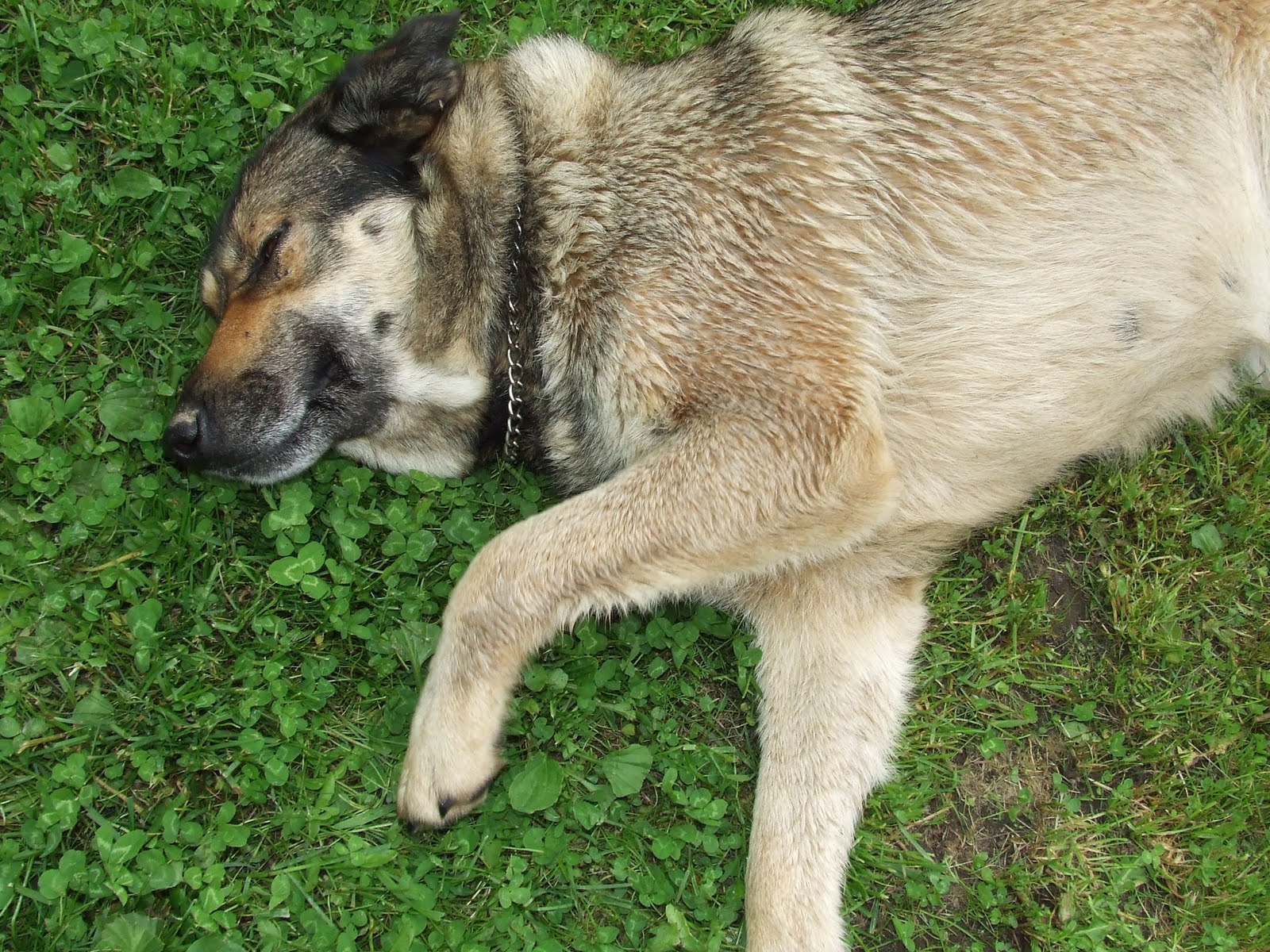
The photos are of Lady or Leidīja, the unofficial mascot of our temple of Johns.
 
Pekse or Peksite may be my neighbor's dog, but I have seen her at other neighbors' houses who also have dogs. In short, she likes company. Peksite frequents the temple grounds, because something  usually goes on there, meaning there are people around. SPeksite always has a grin around her nose when we meet. When recently I walked around the pond, she followed me, and I just happened to have my camera along. No one feeds Pekse, but we do give her an occasional belly rub. Incidentally, for anyone who is curious, my grandfather's dog was named Peksis, and Peksite looks very much like Peksis.
 
Here Peksite wonders if to enter the pond for a swim and then does it.  
We soon walk back to the work site and Peksite dries off in the sun.
Come to visit us sometime soon. Who has heard of a "Temple of Johns of Disappeared Forests" in Latvia before? We believe along with our forebears that trees are sacred. We have some apple wood sculptures to prove that the flesh of a tree feels good to the touch.                          During our introductory phase, we may seem a little unsettled, but we are friendly and will try to meet you if you announce your visit ahead of time at "letters" of these blogs. We are a private property and have much concern for nature, therefore, please show respect for this little nature corner even if on occasion we are not available to meet you.
If you wish to find a place to celebrate Johns Eve as the locals do it, you are welcome to visit Braslavas Park on the eve of June 22nd. We are participating in the event by building the bonfire. Though the pagasts will be at the park, the Temple of Johns is only 1 km away, and on a nice evening it is a nice walk. For Directions see one of the blogs below.

Friday, June 4, 2010

The Temple of Johns of Disappeared Forests
or as in Latvian "Jāņu templis izcirstiem mežiem"

…is located in the northeaster part of Latvia, about a twenty minute ride from Burtnieku Lake. More specifically, we are located at the former farmstead called "Ceļmalnieki" or "Waysiders", Braslavas pagasts, Alojas novads, Limbažu rajons, Latvia. Directions from Valmiera: drive west to the small town of Matisi (23 km), then turn left on the road to Aloja until you reach the first significan crossroad at the village of Vilzeni. At Vilzeni take a right toward Braslavas Park. About 6 km down the road you will enter an oak covered alley. About 1/2 km on your right, you will see a sign that reads "Melnays Jānis". Our temple is about 1 km down the road on the right. Please park your car on the road. Welcome.

Planning for the temple began some ten years ago, but the accelerating pace of deforestation in Latvia makes the temple so much more timely an event. The temple is private, and open for visits to the public on Sundays or by special arrangement. We welcome inquiries about your plans for some special event, anything from meetings, small business conferences by nature loving business men and employees, a Garden Party, a wedding in the country, concerts, dance, etc. Please contact us by way of our blogsite.

The Temple of Johns of Disappeared Forests
http://melnaysjanis.blogspot.com/
is soon opening for visitors.


The Temple of Johns of Disappeared Forests
or as in Latvian
"Jāņu templis izcirstiem mežiem"

is located in the northeaster part of Latvia and about a twenty minute ride from Burtnieku lake. More specifically, we are located at the former farmstead called "Ceļmalnieki" or "Waysiders", Braslavas pagasts, Alojas novads, Limbažu rajons, Latvia. Directions from Valmiera: drive to the small town of Matisi (23 km), then turn left on the road to Aloja until you reach the first crossroad at Vilzeni. At Vilzeni take a right toward Braslavas Park. About 6 km down the road, the road enter an oak covered alley. About a 1/2 km further, you will see a sign that reads "Melnays Jānis". Our temple is about 1 km from there on the right. Please park your car on the road.
 While planning for the temple began some ten years ago, the accelerating pace of deforestation in Latvia makes the temple ever so much more timely. The temple is private, and open for visits to the public on Sundays. We welcome inquiries for your special events, anything from meetings or conferences by the "Greens", a Garden Party, a weddings, to concerts, dance, etc. Please contact us by way of this blogsite.

As we have just put up a large canopy structure (see red roof), we can receive people on rainy days. The owner of the property, Eso Anton Benjamins, is available during the summer months as your guide. Anyone interested on a personalized tour, please contact this blogsite and tell us of the intended time of your visit.

Below are some pictures of the site. Please note that we are still building and adding new objects.


We welcome concerts and other performance groups. Our audience sits around our small ponds, while the performers do their serenading from the opposite side of the pond. However, we prefer that sound amplifiers not be used as a way to respect nature round about. If you hear a frog croak during the middle of a performance, its part of our plan.


The above are some pictures of our site. In due time we will be adding more. Below see blog that provides some information about John or Johns and h/her origins. Hope to see you soon.

Thursday, June 3, 2010

The posts at this site, while for the most part written in English, will on occasion contain material in Latvian. This is the case with the essay below. An English translation may follow later. The essay speaks of the origins of Johns, the Children of Johns, and the Johns Festival on Midsummers Eve.

The copyrighted illustration to the right is of the "Saw Cross" or "Zāģu krusts". It represents the suffering endured by nature at human hands, specifically, the cuttingt of trees by chainsaws. The Temple to Black John advocates laws that will allow the cutting of trees by handsaws only.


Kāpēc “Templis Jānis” izcirstiem mežiem?

Kāpēc “Templis Jānis” izcirstiem mežiem?

Vārds “Jānis” ir viens no visizplatītākiem vārdiem Eiropā, bet ir sastopams arī citur pasaulē. Mēs Jāni varam atpazīt vārdos Johans, Huans, Johns, Jean, Ians, Ivans, Giovanni, u.c. Ja mēs saprotam, ka patskanis J var pārnesties uz G, H, D, V, X utt. un kā tas var arī pavisam izzust, kā, piemēram, vārdā Andžs, tad vārdu virkne, kam pamatā ir “Jānis”, var sasniegt simtnieku un vairāk. Neaizmirsīsim arī, ka Jānis dažkārt kļuva par darbības vārdu joņot. Kāpēc Jānis ir tik populārs?

Iedomāsimies, ka proto-latvieši (latvieši senatnē, gadu simtiem pirms vēl bija Latvija kā valsts) Jāni izrunāja ar G patskani priekšgalā - Ganis vai Gans. Vai tad gans (zosu gans, cūku gans, govju gans, aitu gans, utt.) nav arī tas pats ķēniņš, tikai cilvēku sabiedrības pārvaldnieks? Senākos laikos bija sastopamas sabiedrības ar diviem ķēniņiem. Viens bija garīgās varas ķēniņš, otrs bija viņa domu izpildītājs, vai izpildvaras ķēniņš. Žandarmērija, janisāri savu vārdu ieguva būdami izpildvaras labā roka.

Atcerēsimies arī, ka Jānis Svaidītājs, senos laikos bija ne tikai gans, bet arī dziednieks, burvis, ko šodienas angļu valodas antropologi sauc par šamani. Jānis bija tas, kas ganos saskārās ar dažādiem augiem un iepazinās ar to īpašībām. Vai tā ir patiesība vai tikai iedoma, mēs tikai paši varam izlemt, bet ja vārdam “gens”, cilvēks, pamatā arī ir Jānis, tad nav brīnums, ka vārds Jānis ir tik plaši izplatīts.

Tagad mēs varam labāk saprast kāpēc Jāņu bērni ir saistīti ar Jāņu saimēm. Sen sen, kad vēl lauku un pļavu vietā pasauli apauga meži, Jāņi bija tie, kas apstaigāja mežos izcirstās sokles, izcirtumus un sokļu (varbūt vārdam ir sakars ar vārdu “sādža”) iedzīvotājiem atnesa ziņas no citām pasaules malām. Varam atcerēties, ka agrāk Jāņus atpazina kā staigātājus, jo gani, īpaši kalnu apgabalos, ganāmpulkus dzina uz kalnājiem, kur klajumi (ar mežiem neapaugušas vietas) bija vairāk kā ielejas. Vēlāk Jāņa vārda variantu pielīdzināja uz jebkuru pasaules staigātāju. Ir iespējams, ka joņot (ātri skriet) arī apraksta staigāšanu kā tādu - jāņotājs, staigātājs.

Jānis jāņotājs arī tika piesaukts kā Saules dēls, jo vienmēr atradās ceļā uz kaut kurieni, tātad Saules acs redzes laukā. Saules mātes lielajos griežos (tagad tā sauktajos saulgriežos) Jāņu bērni dedzināja uguni augstos kātos, lai rādītu Jāņiem ceļu uz viņu apmetni. Ziemā bija ceplis, tagad saukts kamīns, kuru kurināja, lai Jāni Ceļotāju sildītu.

Tagad pievērsīsimies pie kādas pretrunīgas domas. Būdams gans laikmetā, kad meži, ne klajumi valdīja pār pasaules telpu, Jānis, Saules dēls, tika uzskatīts arī kā mežu sargs. Pasaulē tad vēl nebija ne tuvu tik daudz cilvēku kā šodien, un ja izcirta sokles, tās ātri aizauga ar jaunu mežu. Parādījās varas vīri. Tiem koki nebija svēti, jo tie nebija viņu telpas noteicēji. Varas vīri zināja kokus tikai izmantot. Viņi izcirta mežus, lai sev celtu pilis, pils vaļņus, karakuģus un vēlāk milzu cepļus, kas cepa ķieģeļus. Varas vīri neļāva soklēm aizaugt, bet izdedzināja celmus un mežu vietā sēja labību. Tā varēja vairāk pelnīt. Koks aug 50 vai vairāk gadus, bet labība prasa tikai vienu vasaras sezonu.


Jāņu bērni nebija priecīgi par savas telpas samazināšanu. Viņi turējās pretī. Bija kari. Kungi pārvarēja Jāņu bērnus, iekarojot viņu vidi. Meži tika ātrāk izcirsti, jo kara pulku vara mežā izlīdzinājās Jāņu bērnu varai par labu (cilvēks paslēpies aiz koka ir labāk aizsargāts), bet uz klaja lauka kungu karapulku vara Jāņu bērnus pārvarēja.

Jāņi, kā senās sabiedrības gani vai pārvaldnieki turējās kungiem pretī un mācīja savus “bērnus” turēties pie senām vērtībām. Tomēr vara, kura nebijās liet asinis, guva virsroku. Atcerēsimies, ka tā sauktais Jānis Pestītājs Jaunajā Derībā tiek tēlots kā vīrs, kurš dzīvo tuksnesī un pārtiek no sienāžiem. Jāņu bērnu bija daudz, jo ir rakstīts, ka daudzi gāja ar Jāni tikties (kungi turēja Jāni prom no pilsētām) pie Jordānas  upes. Taču kungi Jāni sagūstīja un nocirta viņam galvu. Pamazām Jāņu vārds tika aizmirsts un aizvietots ar nenozīmīgiem vārdiem kā saulgrieži, līgo, pikniks, ģimenes svētki utt.

Šodien Latvija tiek pārvērsta tuksnesī. Kaut meži vēl ir samērā daudz, mēs nevaram neievērot, ka tie tiek strauji izzāģēti. Cilvēki dzīvo pie “plikas” izdzīvošanas sliekšņa. Meži ir vienīgais Latvijas dabiskais resurss. Kaut meži tiek aizstāti ar labību, ievērosim, ka “labība” ir vārds ar divām nozīmēm. Kaut “labība” parastā nozīme ir grauds (rudzi, mieži, kvieši, auzas, rīsi), cilvēka zemapziņa nevar neuztvert, ka ar labību nāk apgalvojums, ka labības labums ir galējs. Tātad, cērtiet un nežēlojiet savus mežus, jo tos atvietos “labība” ar pārnestu nozīmi. Padomāsim, vai tā domāt ir ieteicams. Domāsim arī par citādiem atrisinājumiem, piemēram, kāda būtu dzīve, ja mūsu “labība” atkal būtu meži.

Moderna māja soklē! Lai līgo Jāņi, lai līgo meži, lai līgojam mēs!

© Eso / Ceļmalnieki, Braslavas pagasts, Alojas novads, Limbažu rajons, Latvija http://melnaysjanis.blogspot.com/